The road to electrification isn’t the same for everyone
Rachana Senthil
Feb 24, 2026
While electric vehicles (EVs) continue to take over the transportation industry, for many Americans, they still remain a distant reality.
In a new study, Corey Harper, assistant professor of civil and environmental engineering and in Heinz College, looks beyond the technology and focuses on the people behind the wheel. Published in Transportation Research Interdisciplinary Perspectives, the paper used data from the National Household Travel Survey to analyze how socioeconomic factors for American EV owners shifted between 2017 and 2022.
“This study provided a dynamic overview of how the socioeconomic characteristics of EV owners are changing,” Harper explained. “Before, a lot of people used a static snapshot, evaluating socioeconomic characteristics for a single year. The comparison between years allows you to see some of those changes and give you a sense of how different policies could be affecting EV adoption over time.”

Electric vehicle ownership rate by census division: 2017 vs. 2022
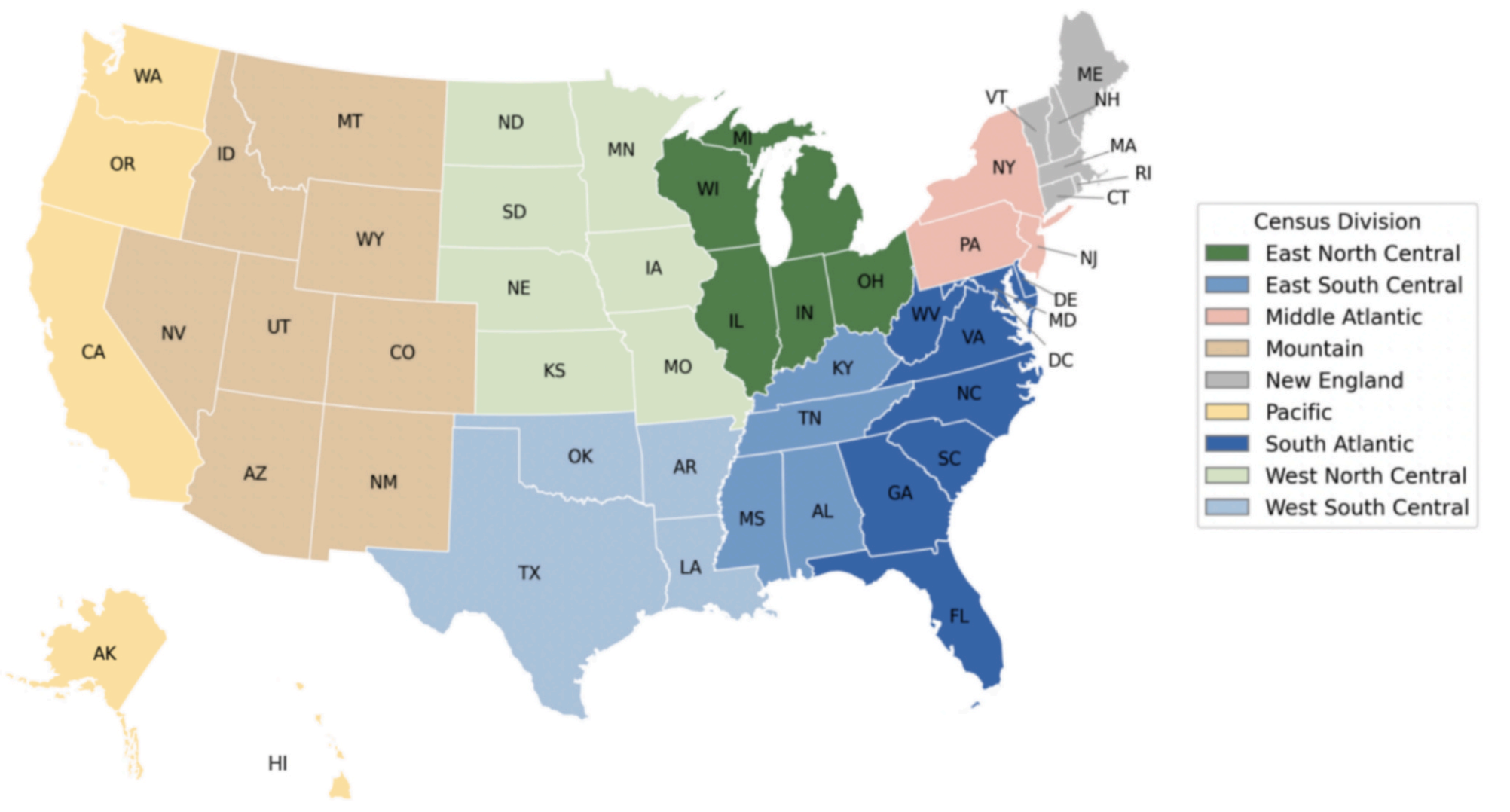
EV owners surged from 1.85 million in 2017 to 7.67 million in 2022. Using latent class analysis, Harper and his team identified three distinct subgroups of those EV owners: affluent urban residents, rural and moderate to small metropolitan statistical area residents, and moderate income urban residents. While the affluent urban group remained a stable and dominant population, there was a significant increase in EV ownership in the rural and moderate to small metropolitan statistical area resident subgroups.
Additionally, the data showed a significant rise in EV owners among Asian and Black populations; however, the dominant group remained wealthier and educated compared to non-EV owners, despite growth. The findings suggest that, while the market is becoming racially and geographically diverse, an income gap exists. According to Harper, the two primary issues that exacerbate this disparity are cost and charging access.
Beyond income alone, homeownership is also a large predictor of EV ownership. Homeowners can install private chargers and wake up to a fully charged car without relying on public chargers. Renters, on the other hand, are at the mercy of landlords, who may see little payoff in updating infrastructure for a technology most tenants don't own.
The study suggests that state and federal incentives, like those already enacted in New York, are helping increase EV ownership rates, especially for rural populations. But, Harper believes the next frontier for researchers and planners must be causal analysis.
"While this study demonstrates why we are seeing changes in who owns EVs, a next step would be causal analysis to really quantify the impact of different policies on EV adoption," Harper said. "I’d like to take a closer look at different policies and be able to distinguish the impact that a particular policy had on EV adoption for different demographic groups.”
As Harper and his team continue to bridge the divide in EV ownership, his research serves as a reminder that a sustainable transportation network should prioritize affordability and access as well as technological advancement.